For college students, classroom education provides the foundation for understanding concepts, theories and academic subjects. However, professional careers require much more than theoretical knowledge. Students also need to understand how organizations operate, how professionals collaborate, how projects are developed and how the technologies they study are used in real-world environments.
An industrial visit in Vellore can help bridge this gap by giving students an opportunity to experience a professional workplace and understand how academic learning connects with industry practices.
For students from engineering, computer applications, information technology, management, commerce, science and diploma backgrounds, an industrial visit can provide valuable exposure to professional workflows, technology, teamwork, communication and career opportunities.
In particular, an IT company industrial visit can help students understand how software, websites, mobile applications, cloud platforms, cybersecurity systems, digital marketing and other technology services are developed and managed in a professional environment.
This guide explains what an industrial visit is, why colleges organize them, what students can learn, which courses can benefit from an IT industrial visit and what colleges should consider when planning an industrial visit in Vellore.
What Is an Industrial Visit?
An industrial visit is an academic activity that allows students to visit a company or professional organization and gain exposure to its working environment, processes, technologies and professional practices.
Unlike classroom learning, where students primarily learn through lectures, textbooks, laboratory exercises and assignments, an industrial visit provides an opportunity to observe how organizations apply knowledge in real-world situations.
During an industrial visit, students may learn about:
- How a company operates
- How different departments work together
- How projects are planned and executed
- How professionals communicate with clients and teams
- What technologies are used in the industry
- How software and digital solutions are developed
- How testing and quality processes are handled
- How cybersecurity and cloud technologies are used
- What skills employers expect from students and fresh graduates
- What career opportunities are available in different technology domains
The exact activities depend on the organization, student department, group size and learning objectives of the visit.
Why Are Industrial Visits Important for College Students?
Students often understand concepts academically but may not know how those concepts are applied in professional environments.
For example, a Computer Science student may learn programming languages in college, but an industrial visit can help the student understand how programming is used as part of a larger software development process involving requirements, design, development, testing, deployment and maintenance.
Similarly, a management student may study marketing strategies in the classroom but can gain a different perspective by observing how businesses use digital marketing, branding, customer communication and technology to reach their target audiences.
Industrial visits can therefore complement academic education by providing students with practical industry exposure.
1. Understanding the Professional Work Environment
Students get an opportunity to see how professionals work in an organization.
- Workplace communication
- Team collaboration
- Professional responsibilities
- Project coordination
- Time management
- Client-oriented work
- Departmental coordination
This can help students develop a better understanding of what to expect after graduation.
2. Connecting Academic Knowledge With Industry
One of the biggest benefits of an industrial visit is connecting classroom concepts with real-world applications.
- A student who learns:
- Programming
- Networking
- Databases
- Software engineering
- Cloud computing
- Cybersecurity
- Digital marketing
- UI/UX
- Data analytics
can better understand how these areas are used within professional projects and organizations.
3. Learning About Current Technology Practices
Technology changes rapidly. Students may study fundamental concepts in college while companies work with a constantly evolving set of tools, frameworks and platforms.
An IT industrial visit can introduce students to technology areas such as:
- Python
- Java
- Full Stack Development
- Cloud Computing
- AWS
- Microsoft Azure
- Google Cloud
- Linux
- Cybersecurity
- Network Analysis
- Data Analytics
- Software Testing
- DevOps
- CI/CD
- UI/UX
- Mobile Application Development
The exact technologies demonstrated can vary according to the selected academic session.
4. Improving Industry Awareness
Students often have questions such as:
What does a software developer actually do?
How does a website become a real product?
What happens after a client gives a project requirement?
How does a company protect systems from cyber threats?
What does a cloud engineer work on?
How do digital marketing teams measure campaign performance?
An industrial visit can provide students with a practical context for understanding these questions
What Can Students Experience During an IT Industrial Visit?
An IT-company visit can be structured around several areas of the technology industry.
The exact program can be customized according to the college department and academic objectives.
Company and Industry Introduction
The visit may begin with an introduction to the organization and the IT industry.
Students can learn about:
- The company’s areas of operation
- Different IT service categories
- How technology companies work with clients
- Different departments within an IT organization
- Common career opportunities
- Skills required for technology careers
This gives students context before moving into technical or professional demonstrations.
Software Development and Project Workflows
Software development is one of the most important areas students can explore during an IT industrial visit.
Students can learn how an idea or business requirement can become a software product.
A typical software workflow may involve:
Requirement → Planning → Design → Development → Testing → Deployment → Maintenance
Students can understand why software development requires collaboration between different roles rather than programming alone.
Depending on the session, students may also be introduced to programming and development technologies such as Python, Java and full-stack web development.
Web Design and Full Stack Development
Web technologies are relevant to students from many academic backgrounds.
Students can gain an overview of how modern websites and web applications are created.
Possible topics include:
- Front-end development
- Back-end development
- Databases
- APIs
- Responsive web design
- User interfaces
- Web application architecture
- Testing
- Deployment
Students can also understand how designers, developers, testers and project teams collaborate during a web project.
Mobile Application Development
Mobile applications have become an important part of modern digital services.
During an appropriate session, students can learn about:
- Mobile application concepts
- Application interfaces
- Front-end and back-end integration
- APIs
- Testing
- Application deployment
- User experience
This can help students understand the development process behind applications they use every day.
Cybersecurity and Network Security Exposure
Cybersecurity is another important area for students interested in IT and networking.
A cybersecurity-oriented industrial visit can introduce students to concepts such as:
- Cybersecurity fundamentals
- Network security
- Security monitoring
- Threat awareness
- Vulnerability concepts
- Network traffic analysis
- Security testing
- Security operations
Depending on the selected session, students may receive exposure to tools and technologies such as Kali Linux, Wireshark and SIEM platforms.
The purpose of such exposure is to help students understand cybersecurity concepts and professional security workflows in an educational environment.
Cloud Computing and IT Infrastructure
Cloud computing has become an important part of modern IT infrastructure.
Students can learn about cloud platforms and the role they play in hosting applications, storing information, managing infrastructure and supporting digital services.
Possible areas include:
- Cloud computing fundamentals
- AWS
- Microsoft Azure
- Google Cloud
- Linux environments
- Servers
- Hosting
- Virtual infrastructure
- Cloud-based application deployment
This can help students understand why cloud skills are relevant across software development, cybersecurity, DevOps and IT infrastructure careers.
DevOps and CI/CD
Students interested in software development can also benefit from understanding how development and deployment processes are connected.
A DevOps-oriented session can introduce concepts such as:
- Development workflows
- Version control
- Continuous Integration
- Continuous Deployment
- Automated testing
- Deployment processes
- Infrastructure
- Collaboration between development and operations teams
This gives students an overview of how software teams can move from development to deployment in an organized and repeatable way.
Data Analytics and Technology-Driven Decision Making
Data plays an important role in modern businesses.
Students can learn how organizations use data to understand:
- Customer behavior
- Business performance
- Trends
- Operational information
- Marketing performance
- Business opportunities
Depending on the session, students may receive an introduction to data analytics concepts and professional data workflows.
This area can be particularly useful for students interested in data science, analytics, business intelligence and management.
Software Testing and Quality Assurance
Developing software is only one part of the software lifecycle.
Students can also learn why software needs to be tested before it is delivered.
A software testing session may introduce:
- Functional testing
- Software quality
- Bug identification
- Test cases
- Testing workflows
- Quality assurance
- Application validation
This helps students understand the importance of quality in professional software development.
UI/UX and Digital Product Design
Technology products need to be usable as well as functional.
Students interested in design can learn about:
- User interfaces
- User experience
- Design principles
- Wireframes
- User journeys
- Visual hierarchy
- Digital product design
This can help students understand how designers and developers work together to create websites and applications.
Digital Marketing and E-Commerce Exposure
An IT company can also provide exposure to digital business functions.
Students can learn about areas such as:
- Search Engine Optimization
- Digital advertising
- Social media marketing
- Content strategy
- Analytics
- E-commerce
- Online customer acquisition
- Branding
This is especially relevant for students from MBA, BBA, B.Com and other business-related backgrounds.
Who Can Participate in an Industrial Visit in Vellore?
Industrial visits are not limited to one particular academic stream.
An IT-company industrial visit can be relevant to students from several disciplines.
CSE Students
Computer Science students can explore:
- Programming
- Software development
- Full Stack Development
- Databases
- Cloud computing
- Cybersecurity
- Testing
- DevOps
- Data analytics
IT Students
Information Technology students can gain exposure to:
- Software systems
- Cloud technologies
- Networking
- Cybersecurity
- Development
- IT infrastructure
- Digital services
ECE Students
Electronics and Communication Engineering students can explore technology areas related to:
- Software
- Networking
- Cloud
- Cybersecurity
- Digital systems
- IT applications
The exact session can be selected according to the department’s academic objectives.
EEE Students
Electrical and Electronics Engineering students can gain broader exposure to:
- Software technologies
- Automation-related technology concepts
- Cloud
- Cybersecurity
- IT systems
- Digital transformation
BCA Students
BCA students can benefit from exposure to:
- Programming
- Web development
- Software development
- Databases
- Testing
- Digital technologies
BSc Computer Science and BSc IT Students
Students can explore practical applications of:
- Programming
- Web technologies
- Software development
- Data
- Cloud
- Cybersecurity
MCA Students
MCA students can benefit from deeper exposure to:
- Software architecture
- Full Stack Development
- Cloud
- DevOps
- Cybersecurity
- Data analytics
- Software testing
MBA and BBA Students
Management students can explore the business side of technology through:
- Digital marketing
- E-commerce
- Business processes
- Project management
- Client relationships
- Branding
- Technology consulting
B.Com Students
Commerce students can understand how technology supports modern business through:
- E-commerce
- Digital marketing
- Online business operations
- Technology-enabled services
- Business analytics
Diploma and Polytechnic Students
Diploma and Polytechnic students can gain exposure to professional IT environments and understand how technical skills are applied in industry.
Industrial Visit vs Workshop vs Seminar
Colleges may use different types of academic industry engagement programs depending on their objectives.
Industrial Visit
An industrial visit primarily provides exposure to an organization’s working environment, departments, technologies and professional workflows.
Workshop
A workshop generally focuses on a specific topic and provides more structured learning or practical demonstrations.
Seminar
A seminar is generally focused on knowledge sharing, awareness and discussion around a particular industry or technology topic.
Training Program
Training is designed for structured skill development over a defined period.
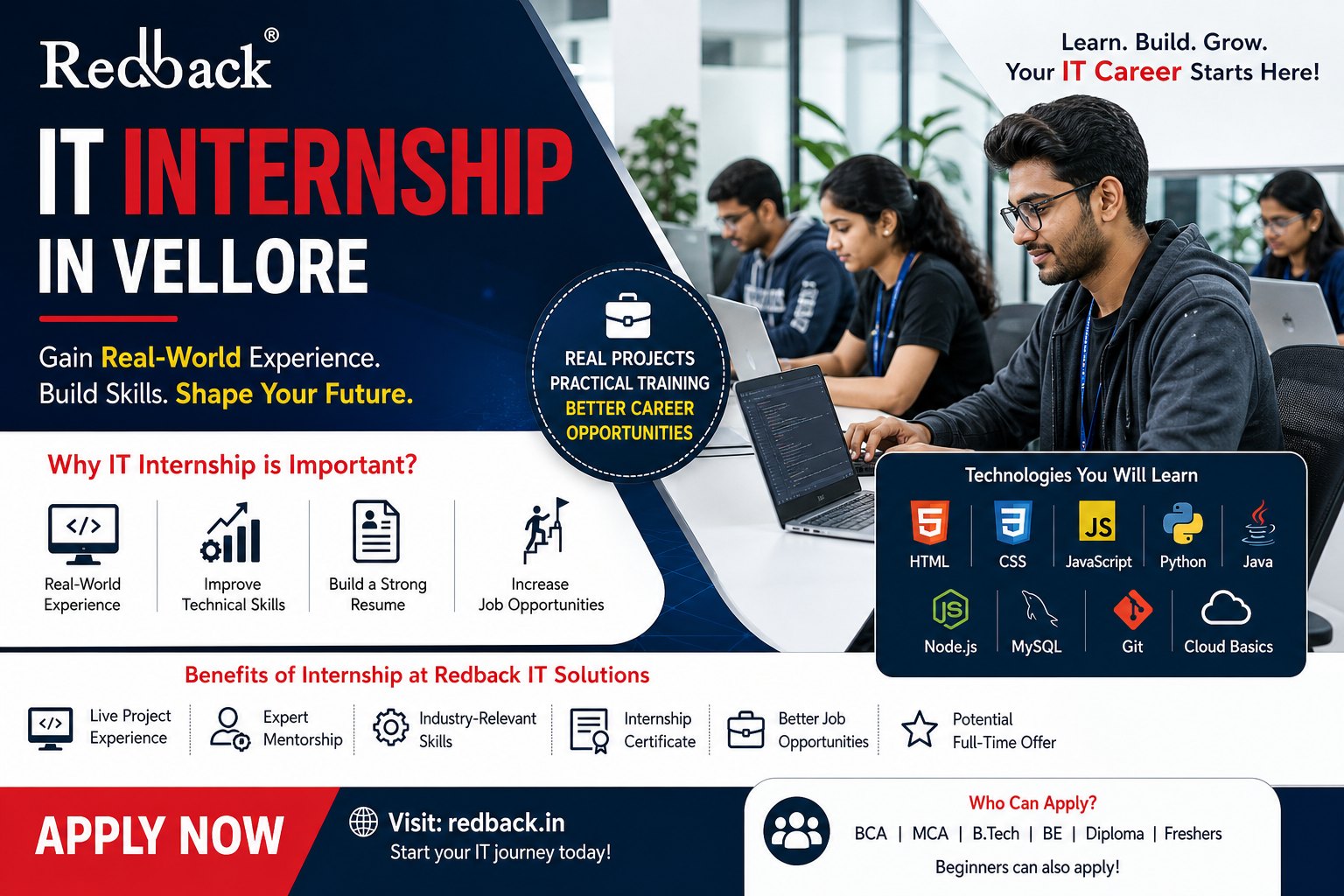
Internship
An internship provides students with longer-term exposure to professional work and practical learning.
A college can select the format that best matches its academic requirements.
How an Industrial Visit Can Help Students With Career Planning
One of the most valuable outcomes of industry exposure is career awareness.
Students may know that they want to work in “IT,” but the IT industry includes many different career paths.
An industrial visit can help students understand the differences between roles such as:
- Software Developer
- Web Developer
- Mobile App Developer
- Cloud Engineer
- Cybersecurity Professional
- Data Analyst
- Software Tester
- DevOps Engineer
- UI/UX Designer
- Digital Marketing Professional
- Project Coordinator
- Business or Technology Consultant
Students can then identify the areas they want to explore further through projects, courses, certifications, training or internships.
What Should Colleges Consider When Planning an Industrial Visit?
Choosing an industrial visit provider should involve more than simply selecting a company name.
Colleges should consider:
Relevance to the Student Department
The session should be relevant to the students’ academic background.
Learning Objectives
The college should have a clear idea of what students should learn from the visit.
Session Duration
The program should provide enough time for meaningful interaction rather than only a short company introduction.
Group Size
Large student groups require proper planning and coordination.
Technology Exposure
Students should receive exposure relevant to current industry practices.
Interaction With Professionals
The opportunity to interact with working professionals can make the experience more valuable.
Safety and Organization
The visit should be properly coordinated between the college faculty and the host organization.
Realistic Expectations
An industrial visit is primarily an academic exposure program. It should complement classroom learning rather than be presented as a replacement for formal technical training or internship experience.
Industrial Visit Opportunities at Redback IT Solutions
Redback IT Solutions is an IT solutions and consulting company offering services across multiple technology and digital business areas.
Its areas of work include:
- IT Solutions and Consulting
- Software Development
- Web Design and Development
- Mobile App Development
- Digital Marketing
- E-Commerce
- Graphic Design and Branding
- Cloud and Hosting
- VPS Hosting
- Maintenance and Support
- Cybersecurity
- Training and Internship
These different technology areas can provide students with a broader understanding of how an IT company operates.
Redback also conducts academic activities including Industrial Visits, workshops, seminars, training programs and faculty development activities.
Depending on the selected session, students may receive exposure to technologies and professional practices related to:
- Python
- Java
- Full Stack Development
- AWS
- Microsoft Azure
- Google Cloud
- Linux
- Cybersecurity
- Kali Linux
- Wireshark
- SIEM
- Data Analytics
- Software Testing
- DevOps and CI/CD
- UI/UX
- Mobile App Development
The exact topics can be planned according to the academic department and objectives of the institution.
Academic Institutions Associated With Redback
Redback has conducted or participated in academic activities involving institutions including:
- Prathyusha Engineering College
- Sree Abiraami Arts and Science College for Women
- SRM Institute of Science & Technology
- Muthurangam Government Arts College
- Meenakshi Sundararajan Engineering College
- AVS College of Arts & Science
These activities include industrial visits, workshops and other academic engagement programs.
The specific activity and nature of the program can vary by institution.
Why Real Industry Exposure Matters
An industrial visit should give students more than a photograph and a certificate.
The real value is the understanding students take back to their classrooms.
After seeing a professional IT environment, students may have a clearer understanding of:
- What happens inside an IT company
- How different teams collaborate
- How technology is used to solve business problems
- What professional skills are required
- Which technologies they want to learn
- Which career path interests them
- How classroom concepts connect with real projects
This can help students make more informed decisions about their academic projects, internships, training and future careers.
How Colleges Can Arrange an Industrial Visit in Vellore
Colleges interested in arranging an IT industrial visit can contact the organization in advance and discuss their requirements.
The college can provide information such as:
- College name
- Department
- Number of students
- Preferred date
- Faculty coordinator
- Student year/semester
- Preferred technology or subject
- Learning objectives
The session can then be planned around the requirements of the student group.
For larger groups, advance coordination is particularly important to ensure that the session can be organized effectively.
Typical Industrial Visit Duration
A typical Redback academic industrial visit session can be planned for approximately 3–4 hours, depending on the selected program, student group and learning objectives.
A session may include a combination of:
- Company introduction
- IT industry overview
- Technology presentation
- Department or workflow introduction
- Demonstrations
- Professional interaction
- Student Q&A
- Career-oriented discussion
The exact agenda can vary depending on the academic requirements of the institution.
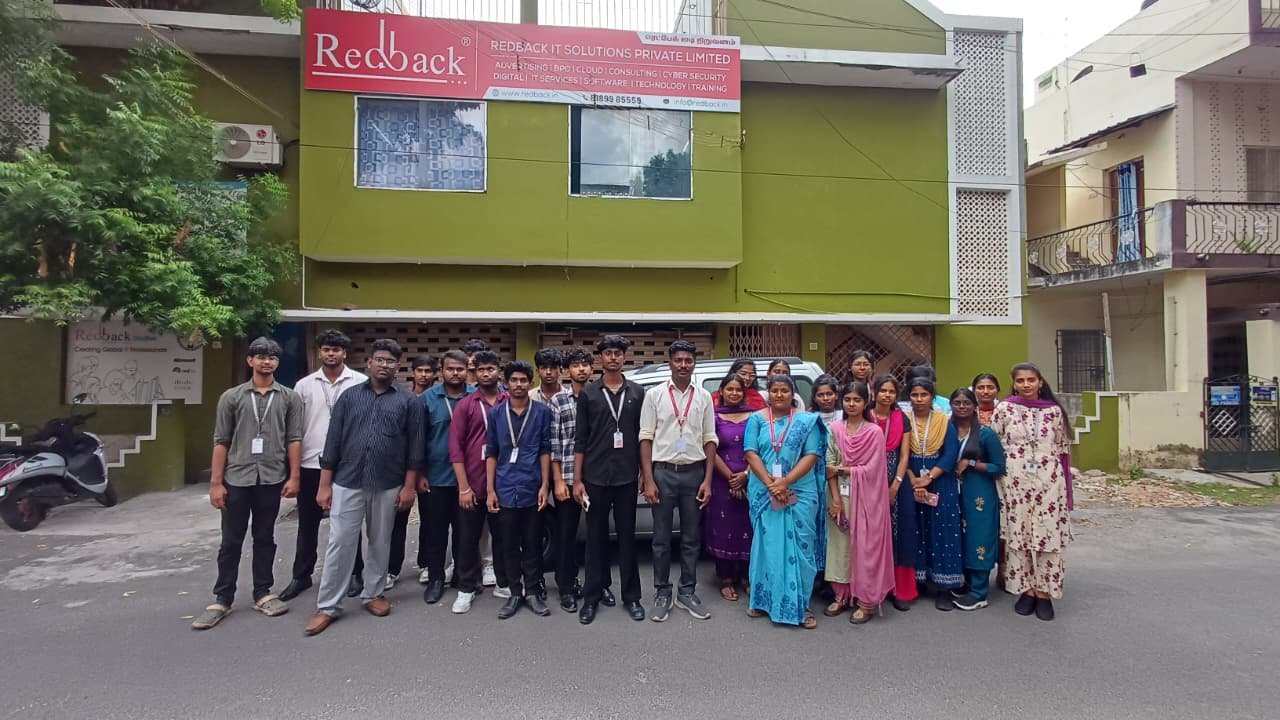
Industrial Visit for 100–150+ Students
Academic industrial visits often involve large student groups.
Redback generally works with groups of approximately 100–150 students or more, subject to session requirements and prior coordination.
For large groups, colleges should provide the expected student count and faculty coordinator details while planning the visit.
This allows the academic session to be organized according to the group size.
Industrial Visit, Training and Internship: Understanding the Difference
Students sometimes confuse these three activities.
An industrial visit provides short-term exposure to a professional organization.
A training program provides structured learning around specific technical or professional skills.
An internship provides a longer period of practical industry exposure and participation in relevant work or learning activities.
Redback provides academic programs across these formats.
Certificates are provided for completed internship and training programs. Certificate availability for an Industrial Visit should be confirmed with Redback for the specific session being organized.
Frequently Asked Questions About Industrial Visits in Vellore
What is an industrial visit for college students?
An industrial visit is an academic activity where students visit a company or professional organization to understand workplace practices, technologies, departments and industry workflows.
Why should colleges organize industrial visits?
Industrial visits help students connect classroom learning with professional applications and gain awareness of workplace expectations and career opportunities.
Does Redback IT Solutions conduct industrial visits in Vellore?
Yes. Redback IT Solutions conducts academic Industrial Visits along with workshops, seminars, training and other educational activities.
How long is an industrial visit at Redback?
A typical session can be approximately 3–4 hours, depending on the selected program and academic requirements.
Which students can participate in a Redback industrial visit?
Students from CSE, IT, ECE, EEE, BCA, BSc CS/IT, MCA, MBA, BBA, B.Com, Diploma/Polytechnic and other disciplines can be considered depending on the selected session.
What technologies can students learn about?
Depending on the program, students may receive exposure to Python, Java, Full Stack Development, AWS, Azure, Google Cloud, Linux, Cybersecurity, Kali Linux, Wireshark, SIEM, Data Analytics, Software Testing, DevOps, CI/CD, UI/UX and Mobile App Development.
Can the industrial visit be customized for a specific department?
The session can be planned around the academic background and learning objectives of the student group. Colleges should discuss their requirements with Redback before scheduling.
How many students can attend?
Redback generally works with academic groups of around 100–150 students or more, depending on the selected session and prior coordination.
Does Redback provide certificates for industrial visits?
Certificate availability depends on the specific academic program. Redback provides certificates for completed internship and training programs; colleges should confirm Industrial Visit participation certificate arrangements when scheduling their session.
Can MBA, BBA and B.Com students participate?
Yes. Technology companies also have business functions such as digital marketing, e-commerce, branding, consulting and project coordination, making selected sessions relevant to management and commerce students.
How can a college arrange an industrial visit?
Colleges can contact Redback with the institution name, department, student count, preferred date, faculty coordinator details and academic requirements to discuss the appropriate session.
Final Thoughts
An industrial visit can be much more than a one-day academic activity. When properly planned, it can give students a practical understanding of how classroom knowledge is applied in professional environments.
For students in Vellore and nearby areas, an IT industrial visit in Vellore can provide exposure to software development, web and mobile technologies, cloud computing, cybersecurity, data analytics, DevOps, UI/UX and digital business functions.
The most valuable outcome is not simply seeing an office. It is helping students understand how professionals work, how technology is applied to real business requirements and what skills they can develop for their future careers.
Redback IT Solutions conducts academic Industrial Visits, workshops, seminars, training and other educational activities for colleges and student groups. Institutions interested in organizing an academic industry-exposure program can contact Redback to discuss their department, group size, preferred date and learning objectives.
Contact Redback IT Solutions
Phone: 8189985559
Email: info@redback.in
Website: https://redback.in/